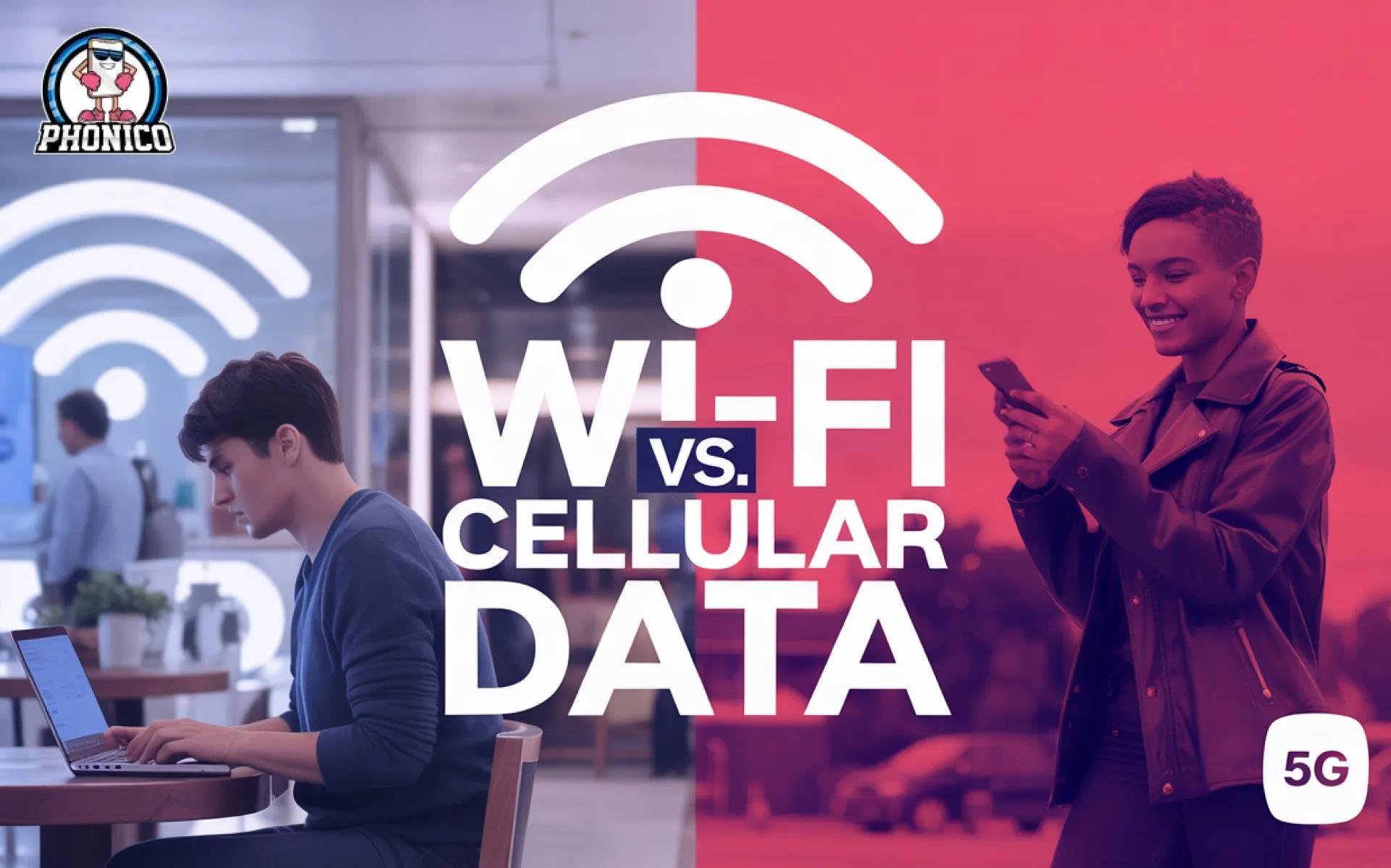

Wi-Fi vs. Cellular Data: What’s the difference?
Connectivity is a necessity now; without WiFi or cellular data, your phone is dead. Both let your devices use the internet and share your travel memories with friends and family. The major confusion people deal with is whether the WiFi or cellular data is smooth and fast.
Travellers find it difficult to decide which one is best to stay connected during travel. In this article, I will clarify WiFi vs cellular data. What's the key difference between them, and which is best in its working?
What is WiFi and how does it work?
WiFi, or wireless fidelity, is the internet service that lets your device access the connection via radio waves. The routers are used to provide your device with a stable connection. Your device requests to connect to the WiFi in range, or you may be asked for the security password to connect.
When the device is connected, it uses the limited-range local network. Wi-Fi's major benefit is that you don’t need to pay for data usage. And provide a fast and smooth connection without additional cost.
What is cellular data, and how does it work?
Cellular data provides internet through wireless carrier networks. Like WiFi, it doesn’t have a limited range. It helps you stay connected within the carrier coverage area. Cellular data relies on the data plans; the data in your plan is cut with your internet activity.
5G is the modern data network that ensures fast internet speed and wide coverage.
WiFi Vs Cellular Data: Key Differences
Here is the breakdown of the key differences between WiFi and cellular data.
Features:
Connectivity:
- WiFi: Connect to the wireless router
- Cellular Data: Connected to the cellular network via a cell tower
Range:
- WiFi: Limited network coverage
- Cellular Data: Wide network coverage
Cost:
- WiFi: Free after broadband pay
- Cellular Data: Charged based on the data plan
Data Usage:
- WiFi: Unlimited with home internet
- Cellular Data: Depends on the plan
Speed:
- WiFi: Fast and stable speed
- Cellular Data: Varies based on the signal strength
Security:
- WiFi: Public WiFi is not secure
- Cellular Data: Secure due to encryption
WiFi is ideal for indoor connections, while cellular data is perfect for accessing the internet without any location limit.
Pros and Cons of WiFi Vs Cellular Data
WiFi and cellular data both provide connectivity, but understanding the pros of cons of each will help to find the best option for you.
Pros and Cons of WiFi
Here are some benefits of a WiFi connection:
- It is faster and stable, and lets you connect within a few seconds.
- Offers unlimited data access that helps to avoid buffering and disconnection.
- If you're a streaming or a gaming person, WiFi is the perfect choice for you.
- In public places like shopping malls, airports, and restaurants, you can use free WiFi.
Some drawbacks of WiFi include:
- Public WiFi is free, but it also poses a security risk to your personal data.
- If more devices are connected to the router, the network slows down.
- Home appliances, walls, and furniture can interfere with your WiFi signals.
- Offers a limited network range, out of which your phone disconnects.
Pros and Cons of Cellular Data
Some pros of cellular data are.
- Cellular data is encrypted, so more secure than WiFi.
- Offers a wide network coverage area, you can use it under your carrier network area.
- Let you connect anywhere, without any limitations.
Here are some cons of cellular data networks.
- Drains the mobile phone battery faster than the WiFi connection.
- The network connection coverage depends on the signal strength.
- Cellular data plans are expensive compared to WiFi.
WiFi Vs Cellular Data: Which is best for security and privacy?
Your home WiFi is good to go, but the public WiFi networks may be risky to connect to. Unauthorised parties can access your personal information, like passwords and card details.
On the other hand, cellular data is more secure and encrypted.
During travel, cellular data connection is a more effective and secure connectivity solution. You can use an eSIM card to access flexible and affordable data.
It helps you avoid connecting with unauthorised public WiFi. If you are travelling to the USA for a business or vocational trip, the Phonico eSIM data plan is the ideal option for you. The carrier offers unlimited talk and text services with data plans.
Conclusion
Wi-Fi vs. cellular data: which one is best for you? It depends on your needs. Both provide a stable connection depending on the conditions, like signal strength and coverage range. If you are looking for a cost-effective and fast network, WiFi is definitely the best option for you.
On the other hand, if you are a frequent traveller who needs mobility and privacy, a cellular data plan is the ideal pick for you.
FAQs
Is cellular data faster than Wi-Fi?
Not necessarily, cellular data speed depends on the strength of the signal. If you have 5G cellular data, you can enjoy fast internet.
Can I use both Wi-Fi and cellular data together?
Yes, some devices allow to use of WiFi and cellular data together. But it often requires a channel bonding VPN app.
Which one is safer for sensitive information?
Cellular data connection is safer and encrypted. Private WiFi is also secure compared to public WiFi.