History Of Cell Phones| Brick Phone to Latest Smartphones
Discover the fascinating history of the cell phone. How did your device evolve from a brick phone to a sleek eSIM-integrated device?
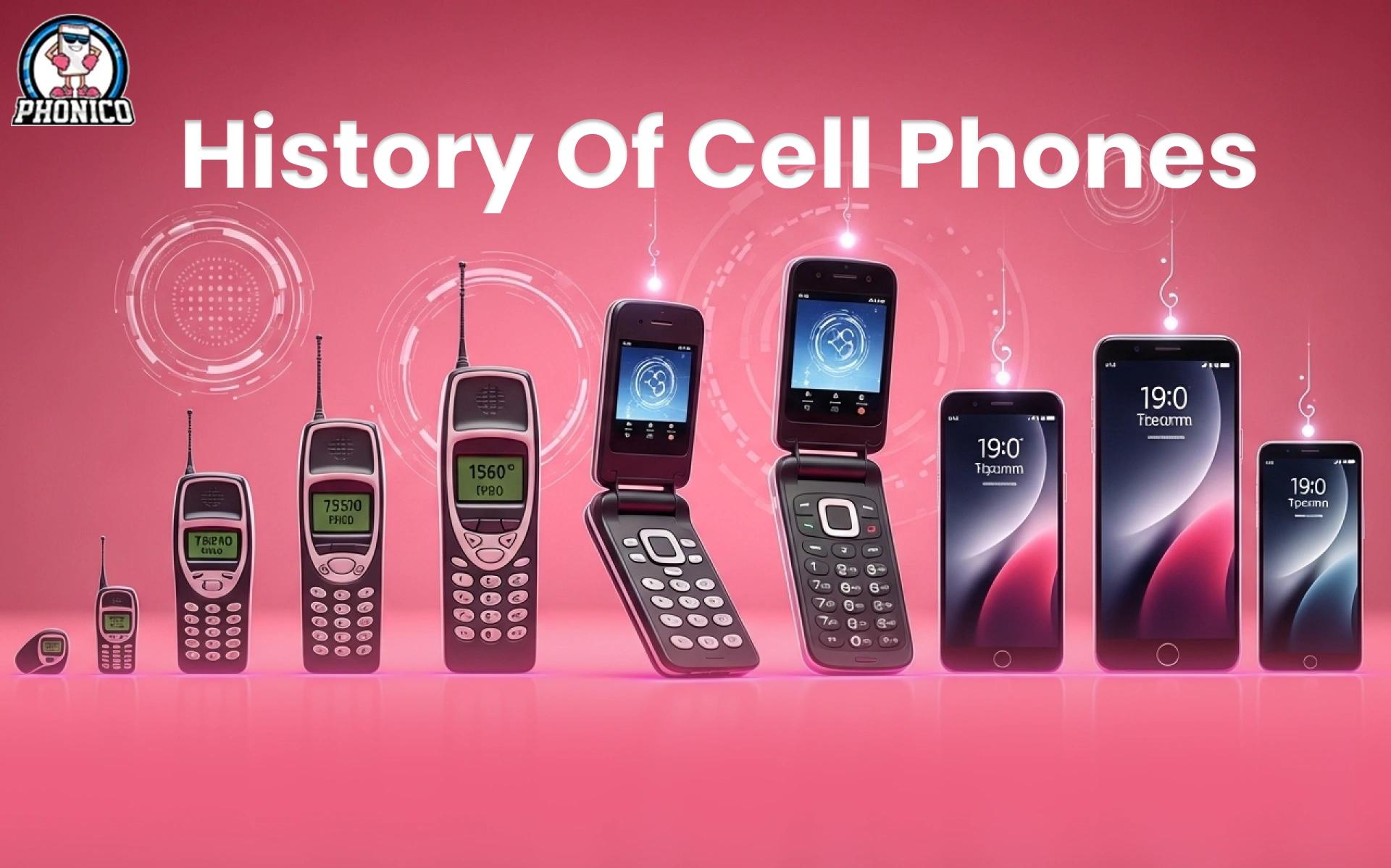
It's hard to imagine life without a cell phone, no calls, texts, or social media. Yet decades ago, people lived without this technology. Then, the history of the cellphone revolutionized communication, moving from bulky to compact devices.
Nowadays, we rely on smart devices to connect worldwide via calling, texting, web browsing, and video calling.
In this article, we will discuss this period of evolution. You will explore when phones were invented and how the first phones evolved into 5G smartphones.
When were cell phones invented?
The first cellular phone was introduced in the 1970s. Motorola’s Martin Cooper was the person who made the first handheld cell phone call in April 1973. The phone had a brick-like shape and was called DynaTAC 8000X. It required 10 hours of charging for 30 minutes of use. The early cellular phones were two-way radios used to communicate in emergencies. These early devices are referred to as the Zero Generation mobile phone.
Over the years, technology has evolved. Early mobile phones featured internet access, texting, and gaming. Today, we have the latest smartphones that are secure, convenient, and easy to carry and use.
Early Smartphone Innovations
The 1990s marked the arrival of 2G technology in mobile communication. Experts worked to improve the device's call quality.
IBM Simon: First Smartphone in 1992
In 1992, IBM Simon was the first smartphone launched after DynaTAC 8000X. The phone was made with the feature of a Simon Personal Communicator, commonly called a touch screen. The device worked in the USA and had app features, including a calculator, email, address book, calendar, and notepad.
Nokia 9000 Communicator
Nokia introduced the 9000 Communicator during the same time. They designed pocket-friendly phones with enhanced functionality.
Nokia 6110: First Gaming Mobile
Nokia 6110 was introduced as the first gaming mobile in 1997. Finnish software engineer Taneli Armanto developed the snake game at Nokia. The game caught people's attention and became popular in the market.
Evolution of Mobile Technology to Smartphone
In 2000, 3G mobile internet was enabled, which allowed the use of social media and web browsing.
First Camera Phone
Japan introduced the first camera cellphone in 2000. Although the camera resolution was low, it was a successful step toward modern smartphone cameras. Soon after, US companies adopted this feature and invented devices with built-in cameras.
Cell Phones with Internet Access 2001
In 2001, smartphones got the features to access the data connection. The Internet availability opens new ways for users to connect through video calls. The devices became more costly, around $33 to $700 with the internet.
Apple’s Rise in Smartphone Market
The world’s first iPhone was introduced in 2007. It was the latest device with advanced features and design. The iPhone included an iPod, internet access, a camera, and an LCD video screen. It was portable and sleek and cost around $499 to $599.
The device became famous in the market as a new technology. In its first year of innovation, almost 1.4 million iPhones were sold. In 2025, there will be over 1.38 billion iPhone users worldwide.
First Android Smartphone
HTC Dream was the first Android smartphone introduced in 2008. Android had a 3.2-inch display, 3.2-megapixel camera, and QWERTY keyboard.
High-Speed 4G LTE, 5G Connectivity Era
After 2010, 4G LTE emerged and offered a fast internet connection. Users can easily stream social media, browse the internet, play online gaming, and enjoy live calling. Apple, Samsung, and Google are popular smartphone companies that offer advanced technology models.
5G and eSIM technology are emerging as the future of fast-speed connectivity. With continuous advancements, the history of mobile technology is far from over.